Autophagy is one of the most misunderstood words in fasting. On social media, it’s treated like a switch you flip at “exactly 16 hours,” and suddenly your body starts “deep cleaning.” In reality, autophagy is a normal, ongoing process in your cells—and fasting is just one of several things that may increase it.
This guide explains how intermittent fasting triggers autophagy in a practical, evidence-aware way:
- What autophagy really is (simple explanation)
- Why fasting may increase autophagy signals
- A realistic timeline (12–72 hours) without hype
- What improves autophagy without extreme fasting
- Safe schedules and warning signs
If you’re new to fasting, start with your main guide first (rules, schedules, safety): Intermittent Fasting Guide: Start Here (Schedules, Rules & Safety).
Key takeaways (read this first)
- Autophagy happens all the time. Fasting may increase it, but it doesn’t “start” from zero.
- Human timing is not precise. Claims like “autophagy starts at 16 hours” are not proven as exact rules.
- Longer fast ≠ better for everyone. Risks increase as duration increases, especially beyond 24–48 hours.
- For most people, the best way to support healthy autophagy signals is: consistent time-restricted eating + strength training + good sleep + nutrient-dense meals.
- If you want a “stages” breakdown, use: 12 to 72 Hours of Fasting: What Happens at Each Stage.
1) What is autophagy?
Autophagy (pronounced “aw-TAH-fuh-jee”) is the cell’s recycling and repair system. The word literally means “self-eating,” because cells break down old or damaged parts and reuse them.
Think of it like housekeeping:
- Remove damaged components (misfolded proteins, worn-out organelles)
- Recycle usable materials (amino acids, fatty acids)
- Maintain cell function under stress (like nutrient shortage)
Autophagy matters because cells constantly experience wear-and-tear. If damaged parts build up faster than they’re cleared, cellular function declines. That’s why autophagy is studied in aging biology and in diseases linked to “cellular clutter.”
Fun fact: The mechanisms of autophagy were important enough that the Nobel Prize in Physiology or Medicine (2016) was awarded for discoveries in this area—showing how central autophagy is to life and health.
2) How intermittent fasting triggers autophagy (the simple mechanism)
Here’s the most useful way to understand how intermittent fasting triggers autophagy:
When nutrients are abundant, your body focuses on growth + storage (building, repairing, storing energy). When nutrients are scarce (fasting), your body shifts toward maintenance + recycling.
Several signals are involved, but you don’t need a biochemistry degree. These are the practical “big levers”:
2.1 Lower insulin + lower amino acids (especially from protein)
Eating increases insulin and amino acids in the bloodstream. These signals tell the body, “We have incoming resources.” When you fast, those signals fall, and the body becomes more likely to switch into maintenance modes (including autophagy-related pathways).
2.2 AMPK rises (energy stress signal)
AMPK is often described as the cell’s “fuel gauge.” When energy is low, AMPK rises and nudges the body toward using stored energy and improving efficiency. This often aligns with increased repair and recycling activity.
2.3 mTOR goes down (growth signal)
mTOR is a major “growth and build” pathway. Feeding tends to activate it; fasting tends to reduce it. Lower mTOR is commonly discussed as one condition that can allow autophagy to increase.
Important: You don’t need to chase extreme fasts to influence these signals. Even consistent time-restricted eating can improve metabolic flexibility and shift nutrient signaling in a useful direction.
To choose the right schedule for your lifestyle (without overdoing it), see: Intermittent Fasting Timing & Duration: Best Frequency and Eating Window.
3) Autophagy timeline during fasting (what’s known vs hype)
This is where most blogs get sloppy. They give exact times like a video game unlock:
- “Autophagy starts at 16 hours.”
- “Autophagy peaks at 48 hours.”
Realistically: autophagy is continuous, and fasting may increase it—but timing varies by person based on:
- your last meal (carb-heavy vs protein/fat-heavy)
- your total calories (days prior)
- your training (glycogen use)
- sleep + stress hormones
- body composition and metabolic health
So instead of fake precision, use this practical timeline as a guide for what’s likely happening.
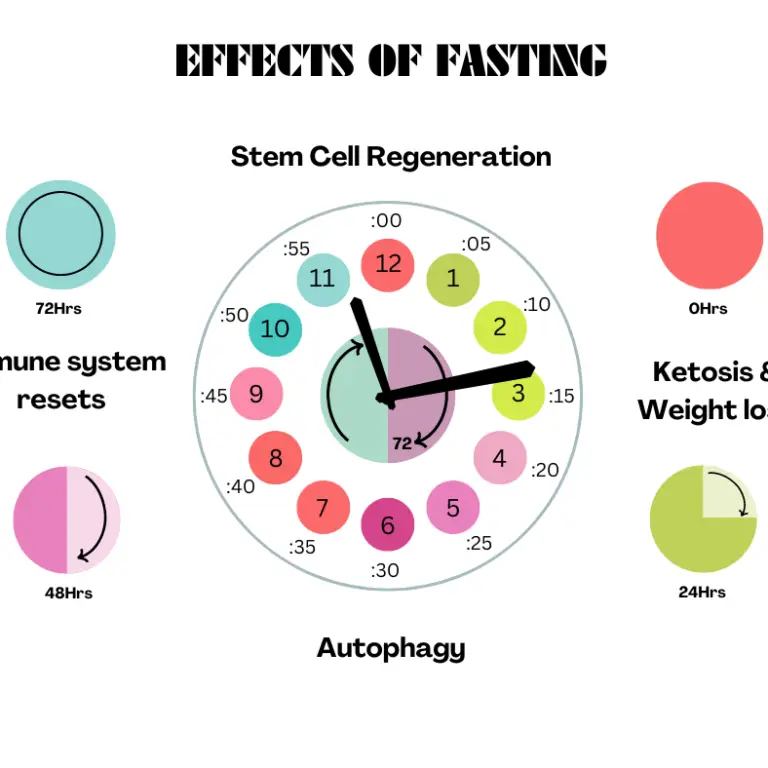
Quick timeline table (12h → 72h)
| Time fasted | What’s likely happening | What you may feel | Smart move |
|---|---|---|---|
| 12 hours | Insulin lower; glycogen use increases; early fat use begins. | Mild hunger, normal energy. | Hydrate. Keep caffeine moderate. |
| 14–16 hours | Deeper glycogen use; fat burning increases; “metabolic switch” begins for some. | Hunger waves; possible irritability. | Electrolytes if headaches begin. |
| 18–24 hours | Ketones rise; nutrient signaling continues to shift; autophagy is widely discussed but not precisely timed in humans. | Energy varies; breath changes possible. | Light training is fine; avoid max intensity if dizzy. |
| 24–36 hours | Ketones higher; stronger metabolic switching; autophagy signaling may increase more. | Cold hands, lightheadedness possible. | Hydration + electrolytes become more important. |
| 36–48 hours | Deeper ketosis; refeed planning matters; risk of low BP rises for some. | Sleep disturbance for some; fatigue. | Plan break-fast meal now. |
| 48–72 hours | “Extended fasting” zone; claims about stem cells/immune changes exist but are nuanced; risk increases. | Weakness/dizziness more likely. | Only with experience/supervision. |
If you want the full stage-by-stage breakdown with safety notes and refeeding tips, use: 12 to 72 Hours of Fasting: What Happens at Each Stage.
4) The “autophagy window” myth (and what to focus on instead)
Here’s the problem with chasing a perfect autophagy hour-count: you can’t feel autophagy. There’s no reliable symptom that tells you “it started.” Most claims are based on animal studies, lab markers, or mechanistic assumptions—not a simple human timer.
What you can measure in real life:
- your consistency
- body fat trend (if fat loss is your goal)
- waist size / photos / strength levels
- sleep quality and energy stability
- blood markers (with a clinician): fasting glucose, HbA1c, lipids
If your fasting routine improves those, you’re already doing the most important “aging-friendly” work—even if you can’t prove a specific autophagy peak.
5) How to optimize autophagy safely (without extreme fasting)
If your goal is to support autophagy-related benefits, here are the safest “high ROI” levers. You’ll notice none of them require 72-hour fasts every week.
5.1 Use time-restricted eating (TRE) most days
For most people, 14:10 or 16:8 is enough to improve metabolic switching, insulin patterns, and appetite control.
Start here if you’re building consistency: Intermittent Fasting Guide: Start Here.
5.2 Train (especially strength training)
Exercise—particularly resistance training—creates cellular stress signals that overlap with repair pathways. It also protects what matters most for aging: muscle.
Use this guide to time training without tanking performance: Exercising While Fasting: Best Timing for Strength and Cardio.
5.3 Don’t under-eat protein “forever”
Yes, high protein intake can stimulate growth pathways (like mTOR), and some people interpret that as “bad for autophagy.” But aging well requires enough protein to preserve muscle and function—especially if you’re training.
Practical approach:
- Use fasting to create rhythm (maintenance vs growth phases)
- Keep protein adequate in your eating window (especially post-workout)
- Don’t turn “autophagy optimization” into chronic under-eating
5.4 Sleep and stress are “autophagy multipliers”
Chronic sleep debt and high stress raise cortisol and can worsen cravings, blood sugar, and inflammation—making your fasting routine harder and less beneficial.
If your fasting window is ruining sleep, shorten it. A “perfect fast” that destroys sleep is not a longevity strategy.
6) Best fasting schedules for autophagy-focused goals
Here are realistic schedules that work for most people and won’t explode your life:
Option A (best for most): 14:10 daily
- Example: Eat 9:00 am–7:00 pm
- Good for beginners, sleep, and consistency
Option B: 16:8 most days
- Example: Eat 11:00 am–7:00 pm
- Common for fat loss + metabolic health
Option C (advanced): 1× 24-hour fast occasionally
- Only if you’re already adapted and side effects are minimal
- Plan hydration and refeeding
To choose frequency and duration properly, use: Best IF Timing & Duration (Frequency, Window & Schedule).
7) What to drink during fasting (and what can reduce benefits)
Hydration and electrolytes are the difference between “this is easy” and “this is miserable.”
Use this full guide for your fasting drinks: Best Drinks During Fasting: Coffee, Tea, Electrolytes (What’s Allowed?).
Also important: many people unknowingly break a fast or spike appetite with “small” extras. If you want the detailed list, use: What Breaks a Fast? Foods, Supplements & Hidden Calories.
8) Risks, warnings, and who should avoid fasting for “autophagy”
Chasing autophagy is not worth risking your health.
Be cautious or avoid fasting if you:
- are pregnant or breastfeeding
- have a history of eating disorders
- have diabetes or take glucose-lowering medications
- have frequent dizziness, fainting, or very low blood pressure
- are underweight, malnourished, or recovering from illness
Stop and seek help if you have:
- fainting, confusion, chest pain
- severe weakness that doesn’t improve with hydration
- persistent palpitations
- signs of binge/restrict cycles or obsessive fasting behavior
If you’re getting side effects, use this safety guide: Fasting Side Effects: Symptoms, Causes & How to Manage Safely.
9) External sources (credible references)
If you want to see “mainstream” explanations and evidence-aware cautions:
- Cleveland Clinic: Autophagy (definition + timing cautions)
- New England Journal of Medicine: Effects of Intermittent Fasting on Health, Aging, and Disease
- Johns Hopkins Medicine: Intermittent fasting and “metabolic switching”
- Nobel Prize (2016): Discoveries of mechanisms for autophagy
- Review (PMC): “Flipping the Metabolic Switch” (fasting physiology)
Conclusion
Autophagy is real, important, and fascinating—but it’s also easy to overhype.
The most practical approach to how intermittent fasting triggers autophagy is not chasing a perfect hour-count. It’s building a routine that improves metabolic health and supports cellular maintenance without increasing stress or risk:
- Use consistent time-restricted eating (14:10 or 16:8)
- Train (strength + cardio)
- Eat nutrient-dense meals with adequate protein
- Sleep well and manage stress
- Keep extended fasts rare (or avoid them) unless supervised
If you want a broader evidence-based benefits overview, read: Benefits of Fasting: What’s Evidence-Based (and What’s Not).
And if your goal is longevity-focused fasting, continue here: Intermittent Fasting and Longevity: What We Know So Far.
Frequently Asked Questions
How many hours of fasting does it take to get autophagy?
Autophagy happens at baseline and may increase with longer fasting. Some clinical sources note animal studies suggest increases around 24–48 hours, while human timing is not precisely established.
How do you know when autophagy starts?
You can’t reliably “feel” autophagy. It’s measured in research settings with lab markers, not by a specific symptom.
Does autophagy stop when you start eating?
Eating (especially protein and carbohydrates) tends to shift the body from recycling/maintenance toward growth and storage pathways, which may reduce autophagy signaling.
Can you achieve autophagy with intermittent fasting?
Intermittent fasting may increase autophagy signaling, especially with longer fasting windows. But it’s not an on/off switch, and outcomes vary by person.
Can I drink water during fasting and still support autophagy?
Yes. Hydration supports normal body function and doesn’t “break” a fast.
How to maximize autophagy without doing extreme fasts?
Use consistent 14–16 hour fasting windows, train regularly, avoid constant snacking, prioritize sleep, and focus on nutrient-dense meals during eating windows.
What blocks autophagy the most?
Constant feeding/snacking, high calorie intake, and poor sleep/stress patterns can reduce the “maintenance” signaling that fasting aims to create.